Rail monitoring
We regulate Network Rail and other railway networks including the Channel Tunnel and High Speed 1.
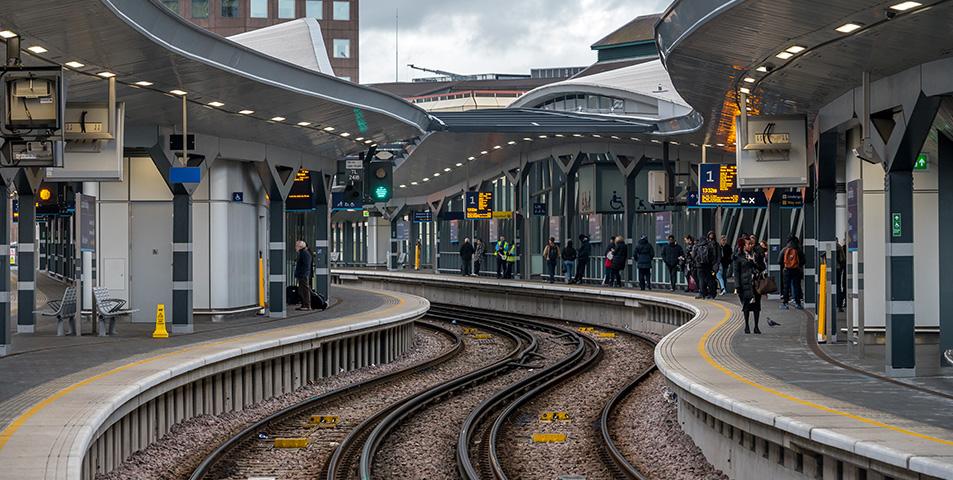
We regulate Network Rail’s stewardship of the rail network: for funders, train companies and their passengers, freight operators and their customers and taxpayers. Network Rail is the monopoly owner and operator of the GB railway network, including track, signalling, bridges, tunnels and stations. We hold Network Rail to account for delivering a safe, high-performing, and efficient railway. We do this by enforcing compliance with its licences and by conducting five-yearly reviews that set its funding and what it must achieve.
Explore rail monitoring
Find out about performance and reliability, financial oversight and rail investigation and enforcement.
Performance and reliability
We regulate Network Rail's performance and reliability on a continuous basis.
Financial oversight
An overview of the rail industry’s efficiency and finance, productivity and costs benchmarking.
Network Rail's network licence
Network Rail's network licence sets out the organisation's obligations and requires it to comply with the conditions we set in the public interest.
Rail investigation and enforcement
A list of our rail investigations, all our rail enforcement to date and how we enforce Network Rail’s licence conditions.
Other rail networks we regulate
We regulate other railway networks including the Channel Tunnel and High Speed 1.
Watch our video about Network Rail regulation.

Sam McClelland-Hodgson, Network Regulation Manager
We hold Network Rail to account for the performance and services that it said it would promise to deliver. We do this through the network licences, in licensing and holding them to account deliver those obligations, and through the five-year processes in which we decide what their funding is and what we require them to deliver over that five-year period.
We focus very much on the network licence. This licence sets out three core duties. These particularly cover how it maintains, operates and upgrades the network, how it engages with its stakeholders, and also how it provides information to train operating companies to ensure that they can fulfil their duties to its passengers. And this ensures that passengers are able to get information and plan and carry out their journeys with a bit of confidence.
In our role in monitoring and regulating Network Rail, we are looking at data, we are looking at evidence all the time to see what it's doing against all of those activities. The way we're doing this is looking at their performance at a regional level, at a system operator level, and when we find issues, we then take an approach, which is a staged approach. We consider the evidence, what the appropriate intervention is to ensure that we're on top of performance and we can make sure that improvements happen quickly for passengers, for freight operators and also for the taxpayer.
It's a policy that we have where we have early intervention and early resolution, ideally so that we are in a position that we can minimise any harm that would happen to those rail users. If we find that there is evidence to suggest that Network Rail has breached its licence, whether it be previous, current or future likely, we do have legal enforcement powers which we can use.
These include things like enforcement orders which require them to do something, require them to improve, or through financial penalties. And this is really a tool to ensure that we are making sure that they come back into compliance.