
The passenger train fleet in Great Britain
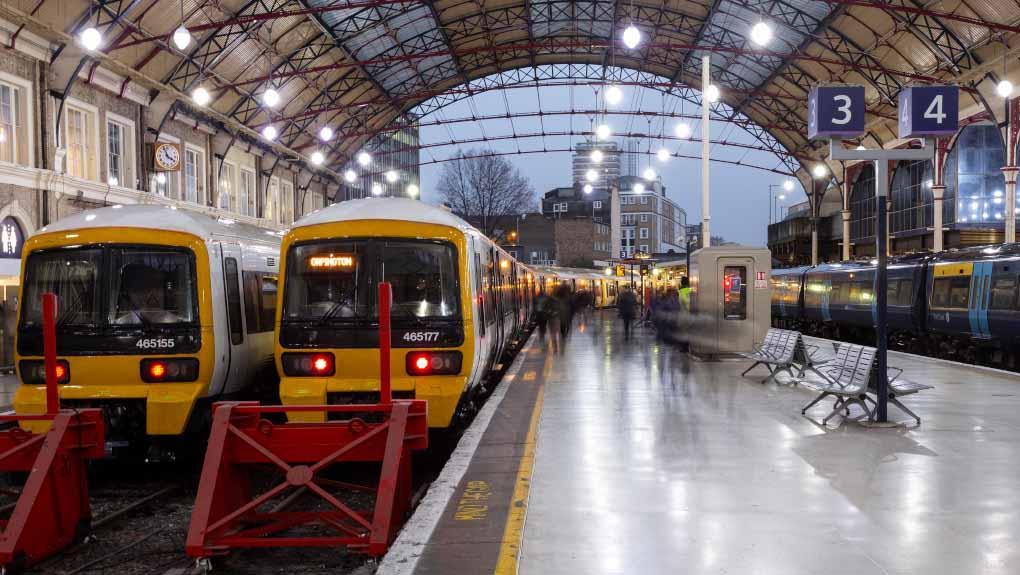
Did you know there are more than 15,000 vehicles in the national railway fleet? The oldest rolling stock were built in the 1970s and are now operated by ScotRail. Newer examples include East Midlands Railway’s Class 810, and South Western Railway’s Class 701.
Rolling stock in the last 8 years
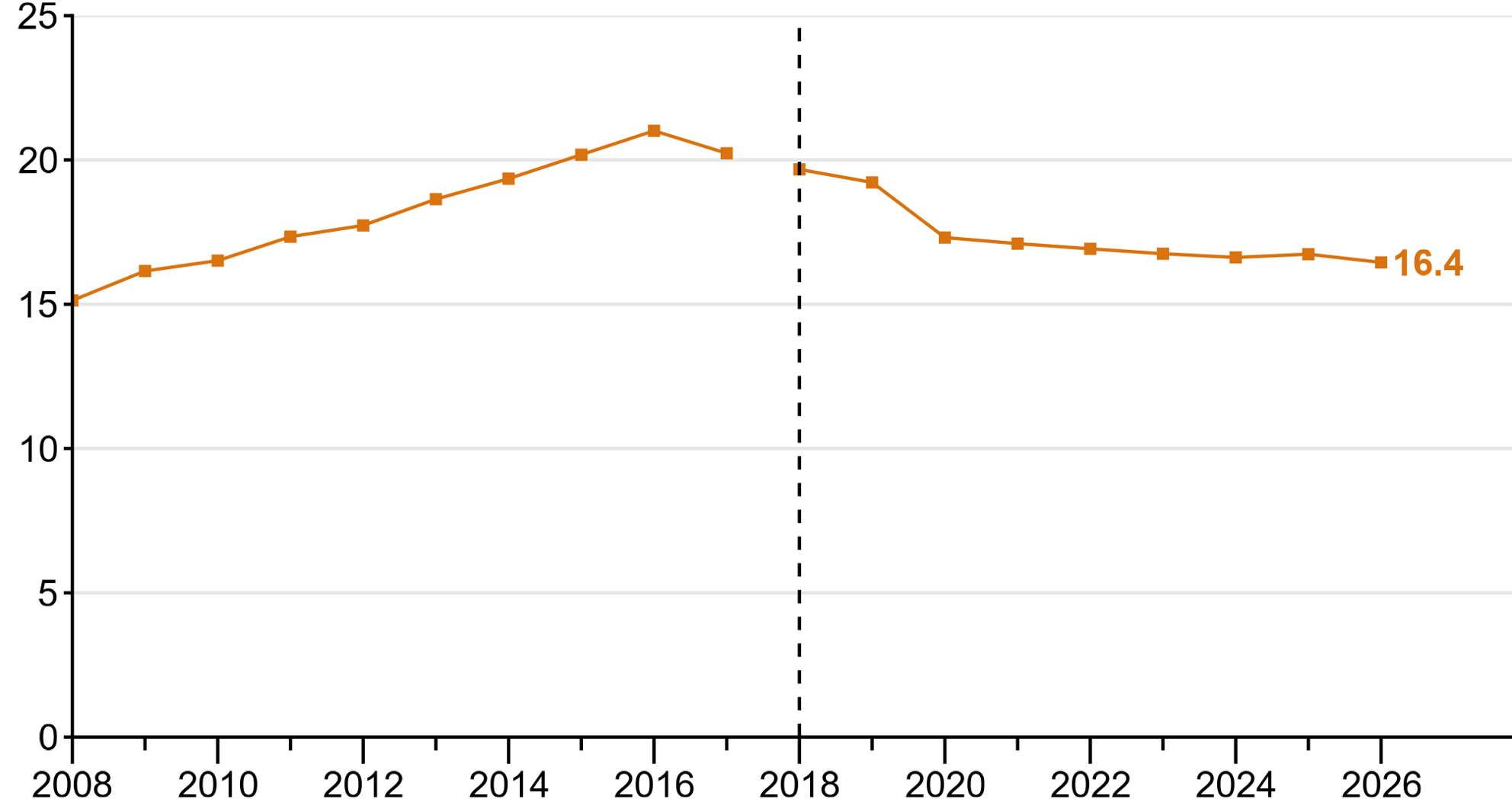
The average age of rolling stock has changed over time. Eight years ago (year ending March 2018), the average age for the public service operators’ stock in Great Britain was 19.7 years, however, as of 31 March 2026, this decreased to 16.4 years. This reflects the introduction of newer rolling stock and the removal of older vehicles. Over this time period, some older fleets have been refurbished to increase capacity, and also to meet new accessibility standards, so this average age doesn’t necessarily reflect the comfort or accessibility of this stock.
Average age of rolling stock in years (public service operators), Great Britain, as of 31 March, 2008 to 2026
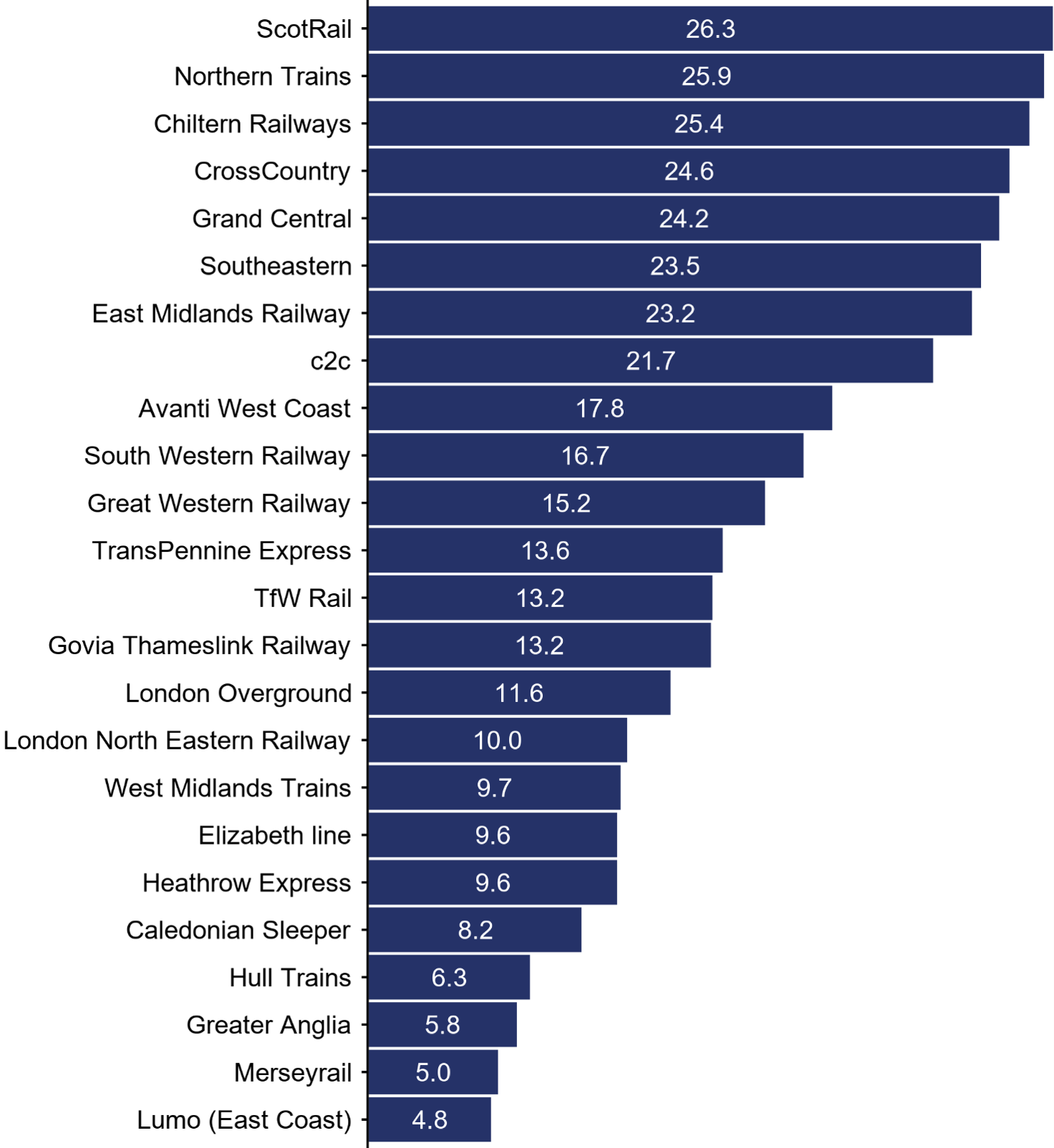
The average age varies substantially by operator. As of 31 March 2026, Lumo (East Coast) had the lowest average age at 4.8 years, while ScotRail had the oldest fleet with an average age of 26.3 years.
Average age of rolling stock in years by operator, Great Britain, as of 31 March 2026
What drives the changes in average age?
A rail vehicle has a typical service life of around 30 to 35 years. Therefore, after a period of investment in new stock, the average age will rise for a number of years before the next wave of replacement vehicles is introduced which brings the average age back down.
Any rolling stock in use as of 31 March 2018 which was still in use as of 31 March 2026 would have aged 8 years, meaning that without the addition of any new stock, the average age would have increased by 8 years. Therefore, a decrease of 3.2 years (down from 19.7 years to 16.4 years for all operators) in that same time reflects train operators either introducing newer rolling stock, retiring older rolling stock, or a combination of these.
These statistics are a measure of the age of a vehicle, and because rail vehicles have a long service life, an important factor for customers is how the train is maintained and refurbished over its life to improve the experience on board the train.
What do we publish?
Each year, ORR publishes its annual Rail infrastructure and assets statistical release. This contains the latest data on the average age of rolling stock, as well as the traction type of these vehicles (electric, diesel, bi-mode or locomotive hauled). This also includes information on the length of the network, track electrification and the number of mainline stations.
The data source for the average age of rolling stock statistics is the R2 database, which is maintained by Rail Safety and Standards Board (RSSB). R2 holds details of every vehicle registered to operate on the railway in Great Britain, and is the single repository for all vehicles and major components with full maintenance history.
Public service operators are train operators which are publicly contracted (or owned). These are referred to as ‘franchised’ operators in some of our other content.