


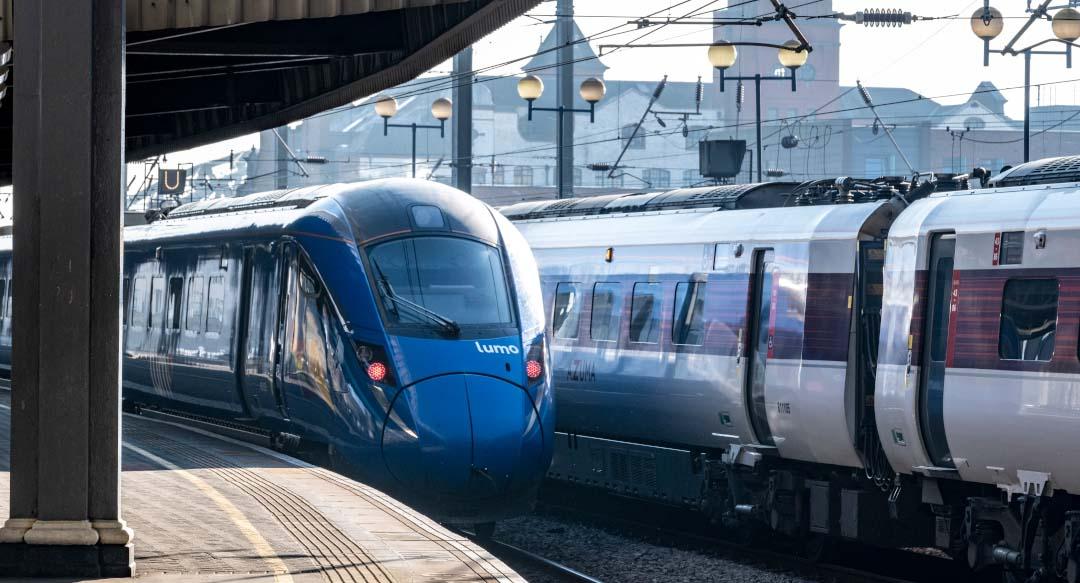
Why we monitor open access
We are often asked what effect open access rail services have on the passenger experience and the wider railway.
Until Great British Railways (GBR) is stood up, ORR is responsible for regulating access to the rail network and deciding, where appropriate, whether operators can secure rights to run new services.
ORR is responsible for decisions on both domestic and international applications, which attract significant interest from industry, government and passengers. By monitoring how services perform and how passengers respond, we can provide evidence that helps operators, investors, policymakers and ORR better understand how rail markets are developing and where future opportunities may emerge.
That is why ORR publishes an annual open access monitoring report. By tracking market outcomes over time, we can build a clearer picture of how rail markets are evolving and how passengers experience the services that operate within them. This evidence helps inform future regulatory decisions and contributes to wider discussions about the future shape of the railway.
A growing international dimension
This year’s report has a significant focus on the international open access market, following our decisions to grant access for Virgin Trains to Temple Mills International depot, and the High Speed 1 network, unlocking the prospect of international rail competition for the first time since the Channel Tunnel was opened.
Since these decisions were taken, interest from a number of prospective operators has continued, reflecting the opportunities many businesses see in international passenger rail. To better understand both those opportunities and the challenges that remain, ORR spoke with infrastructure managers, existing operators and prospective entrants during summer 2026. Participants were broadly optimistic about the potential for increased competition and growth in international rail, while highlighting a number of interconnected challenges around access to key facilities, financing, and investment planning.
Domestic open access
Open access operators remain a very small part of the overall rail market, accounting for around 0.5% of passenger journeys on the GB rail network. On average, open access operators performed slightly better than comparable long-distance contracted operators on measures of punctuality and reliability during 2025-26, with significantly lower cancellation rates. Passenger demand has also recovered strongly since the pandemic, particularly amongst domestic open access operators, although some of this growth reflects the introduction of new services in recent years.
Passenger experience presents a more nuanced picture. Overall passenger satisfaction was generally higher amongst open access operators, with all domestic open access operators recording satisfaction scores around or above the industry median. At the same time, complaints per journey remained higher for open access operators than for comparable contracted operators and increased more quickly during the latest year. As in previous years, punctuality and reliability remained amongst the most important drivers of passenger complaints.
Looking ahead
The rail market in Great Britain will undergo significant changes over the coming years with the creation of GBR, and ORR as the independent regulator will continue to monitor domestic and international passenger services with a focus on whole system outcomes. You can read our full open access monitoring report here.