

Channel Tunnel
We provide leadership, advice and secretariat support to the Intergovernmental Commission (IGC) and Channel Tunnel Safety Authority (CTSA), with the IGC currently acting as the safety regulator for the UK half of the Tunnel.
The introduction of new bi national legislation led by the Department for Transport (DfT), reflecting the post European Union (EU) regulatory framework, is now expected in 2027. ORR is preparing to take on National Safety Authority responsibilities and is working with UK and French counterparts to establish effective future governance and regulatory arrangements.
Over the reporting period we have:
- Continued engagement with Eurostar on the design and introduction of new rolling stock, including double deck trains intended to replace the existing e300 fleet.
- Carried out inspections of Eurotunnel’s arrangements for managing infrastructure, including drainage systems and civil assets, alongside risks such as manual handling.
- Completed the assessment of Eurotunnel’s application for renewal of its safety authorisation, identifying improvements in the structure and documentation of its safety management system.
December 2025 disruption
The Channel Tunnel experienced significant disruption on 30 to 31 December 2025, following a series of incidents affecting both Eurotunnel and Eurostar services. These included overhead line failures and stranded trains, resulting in suspension of services and prolonged loss of power for some trains.
Although there were no injuries, thousands of passengers were affected, highlighting the challenges of managing resilience and passenger welfare in a complex, cross border system.
At the request of the Rail Minister, ORR and the IGC are undertaking a joint review, led by an independent expert, to understand the causes of the disruption, assess the effectiveness of the response, and determine how lessons from previous incidents have been applied. Findings are expected in Autumn 2026.
Transport for London (TfL)
Our RM3 assessments identified variation in management maturity across TfL’s directly managed operations and its concession operators. While leadership, policy and governance arrangements are generally well established, the consistent application of risk controls at operational level remains uneven, particularly across different parts of the network.
During the year, we focused on key risk areas, including ageing infrastructure, platform train interface safety, and occupational health, particularly the control of Legionella. TfL has continued to improve its use of safety data and performance metrics, providing better visibility of trends and emerging risks, although further work is required to ensure this data is consistently used to support proactive decision making.
On London Underground, our work highlighted opportunities to strengthen asset management and assurance processes, and to improve the quality and consistency of risk assessments. In particular, there is a need to better demonstrate that risk controls are effective in practice and that risks are reduced so far as is reasonably practicable.
On the Docklands Light Railway, we investigated risks associated with the introduction of new rolling stock following a station overrun incident. We are continuing to engage with the operator and infrastructure manager to ensure that technical modifications, operational controls, and assurance processes are robust prior to the fleet returning to service.
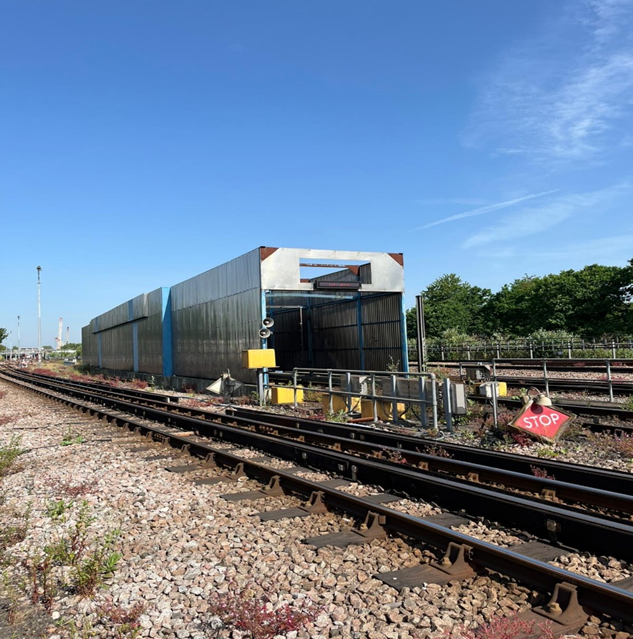
Case Study 3: Management of Legionella Risk in Train Wash Systems
Train wash systems present a higher risk of exposure to Legionella due to their operating conditions, including aerosol generation and intermittent use. Effective management requires robust risk assessment and control measures in line with COSHH and the Approved Code of Practice (L8).
In 2025–26, our inspections found that LUL had not consistently implemented suitable and sufficient risk assessments, and that governance arrangements were unclear. There was limited evidence of competent responsible persons, and written control schemes were not consistently in place. Although sampling and dosing activity was taking place, there was insufficient assurance that risks were being effectively managed in a systematic and consistent way.
As a result, we undertook targeted engagement with LUL to secure a programme of corrective actions. This included completing risk assessments and written schemes across affected sites, clarifying roles and responsibilities, and delivering training for those responsible for managing Legionella risks. Some higher risk systems were removed from service or decommissioned.
LUL has since established a structured programme to address these issues, supported by improved governance and clearer accountability. While this represents good progress, embedding these arrangements and demonstrating their effectiveness in practice remains essential. We will continue to conduct targeted inspections and engagement to ensure that Legionella risks are consistently and effectively controlled over the longer term.
Trams and Light Rail
Safety performance across the tram sector remains broadly stable, with serious incidents continuing to be rare. However, there have been increases in lower consequence events such as low speed derailments and collisions at crossings, reinforcing the need for continued focus on risk control.
Inspection activity identified variation in the quality of risk assessment and the application of control measures, particularly at pedestrian and highway crossings where risk is influenced by local conditions. While operators generally understand the risks, controls are not always applied consistently or reviewed effectively.
The sector demonstrates established arrangements for contractor management and safe delivery of work, but we identified recurring weaknesses in the implementation and assurance of risk controls, including limited follow through on identified improvements.
The management of occupational health risks requires further attention, with weaknesses identified in COSHH assessments, which are often generic or insufficiently reviewed. We have supported improvement through engagement with the Light Rail Safety and Standards Board, including industry workshops and changes to reporting processes.
Progress following the Sandilands derailment continues, although some technical measures, including overspeed protection and driver vigilance systems, are not yet fully implemented across all networks.
Heritage and Minor Railways
Overall safety performance remains stable, with incident trends broadly consistent with previous years. However, some precursor events, including trains passing the end of their authority, have increased, particularly during peak operating periods and special events.
Our inspections found that risks are generally controlled in practice, supported by experienced staff, and established operational practices. However, management maturity remains limited, with continued reliance on individual competence rather than systematic, evidence based processes.
Key areas for improvement include competence management for safety critical roles, the quality and consistency of record keeping, and the management of occupational health risks. In many cases, controls rely heavily on personal protective equipment rather than more effective measures at source.
We continue to support the sector through targeted inspections, enforcement where necessary, and collaborative work with the Heritage Railway Association, including workshops aimed at improving capability and sharing good practice.
Digital Safety
Digital and software related risks are becoming increasingly significant as the railway becomes more dependent on integrated systems and operational technology. While awareness of these risks is growing, management approaches are still developing and not yet consistently embedded across the sector.
We have continued to strengthen our internal capability and have developed a Digital Safety Strategy, supported by a new Strategic Risk Chapter, to clarify expectations and provide direction for industry. This work has been informed by engagement with a wide range of stakeholders.
Further work is needed to ensure that digital and operational technology risks are fully integrated into safety management systems, with clear processes for identifying, assessing, and controlling risks associated with software failure and system interaction.
We will continue to engage with industry to support a more mature, coordinated approach to digital safety risk management.
Health and Safety by Design
We continue to engage early with rail projects of all sizes to influence design decisions and embed health and safety considerations from the outset. This includes both large scale infrastructure programmes and smaller schemes.
Updated guidance and a refreshed Strategic Risk Chapter provide clearer direction to industry, supporting duty holders in understanding regulatory expectations and applying good practice.
Early engagement enables risks to be addressed at the point where interventions are most effective, reducing the need for later corrective action and improving safety outcomes.